Use the smallest Astro starter theme that matches what you have already decided: Welcome to Astro, the official basics example, if nothing is decided; Astro Cloudflare Starter for Cloudflare; the DatoCMS or Strapi starter for those CMSs; Accessible Astro Starter when accessibility comes first; and Astroplate for a finished multi-page site. The official starter is one command, npm create astro@latest, and adding -- --template <user>/<repo> starts from any free pick below.
Jump to the quick-picks table to compare all 15 free starters. Techlo Lite, our free theme, is the last free entry, and our paid Stella and Upstart come after it. Related: blog themes, landing page themes, theme licenses.
Picks by need
- Nothing decided yetWelcome to Astrothe official basics example, no extra packages
- Deploying to CloudflareAstro Cloudflare Startermarketing pages, Starlight docs and Pagefind search
- Content in DatoCMSDatoCMS Astro Starter Kitofficial DatoCMS repository on Astro 7, no license file
- Content in StrapiAstro Strapi StarterAstro 7 front end for a Strapi backend, MIT
- Accessibility firstAccessible Astro Starterskip links, keyboard menus and a reduced-motion toggle
- Finished multi-page siteAstroplate15+ pages, multiple authors, search and dark mode
Official Astro starter themes
The Astro team keeps its starters in the examples folder of the Astro repository. Each one installs with one command, and on November 1, 2026 all five below declared Astro ^7.4.4 in package.json.
npm create astro@latest -- --template minimal| Theme | What you get | Packages beyond Astro |
|---|---|---|
basics | One page with a layout and a welcome component (entry 1) | none |
minimal | A single index.astro page | none |
blog | Blog posts in Markdown and MDX, an about page, RSS and a sitemap | MDX, RSS, sitemap, sharp |
portfolio | Home, about and work pages with project detail pages and a theme toggle | none |
starlog | Release notes with a page per release, light and dark modes | Sass, sharp |
Replace minimal with any name in the table. The official blog example is also compared with other blog themes in our blog themes guide.
Quick picks: 15 free starters compared
Facts checked on GitHub on November 1, 2026. “Astro” is the major version in each theme’s package.json, “Last commit” is the latest commit by a person (dependency-bot commits are skipped), and “Stack” lists the main packages it installs. Select a name to jump to its full entry.
| Theme | Best for | Astro | License | GitHub stars | Last commit | Stack | Demo |
|---|---|---|---|---|---|---|---|
| Welcome to Astro | Learning Astro, or the leanest official start | 7 | MIT | part of the Astro repo | Oct 2026 | none beyond Astro | Demo |
| Bryan Hogan Astro Starter | Small sites with plain CSS and a blog | 7 | MIT | 30 | Oct 2026 | MDX, RSS | Demo |
| DatoCMS Astro Starter Kit | Editors already on DatoCMS | 7 | None (official DatoCMS repo) | 11 | Oct 2026 | React, Vercel adapter, DatoCMS | Demo |
| Astro Cloudflare Starter | Marketing and docs sites on Cloudflare | 7 | MIT | 43 | Jul 2026 | MDX, Tailwind, React, RSS, Pagefind search, Starlight | Demo |
| Astro EmDash Starter | Self-hosted content with SQLite and R2 | 7 | MIT | 28 | Aug 2026 | MDX, Tailwind, React, RSS, Pagefind search, Starlight, Node adapter | Demo |
| Astro shadcn/ui Template | Apps that want shadcn/ui components | 7 | MIT | 210 | Oct 2026 | Tailwind, React | Demo |
| Astro Performance Starter | Strict performance budgets and tests | 7 | MIT | 7 | Oct 2026 | MDX, Tailwind, Preact, RSS | Demo |
| Astro i18n Starter | Multilingual sites on Astro i18n routing | 7 | MIT | 150 | Jun 2026 | MDX, RSS | Demo |
| Stardrive | Content-heavy sites with deploy tooling | 7 | MIT | 220 | Oct 2026 | Tailwind, RSS, Cloudflare adapter | Demo |
| Astro Starter Pro | Production marketing sites | 7 | MIT | 61 | Oct 2026 | MDX, Tailwind, RSS | Demo |
| Astro Strapi Starter | Editorial sites on Strapi | 7 | MIT | 23 | Jul 2026 | MDX, Tailwind, React, Strapi | Demo |
| Beginner Astro Starter Kit | Beginners building from CodeStitch blocks | 7 | CC0-1.0 | 34 | Oct 2026 | none beyond Astro | Demo |
| Astroplate | A finished multi-page site with blog and authors | 7 | MIT | 1,219 | Jul 2026 | MDX, Tailwind, React | Demo |
| Accessible Astro Starter | Accessibility requirements first | 7 | MIT | 1,189 | Oct 2026 | MDX, Tailwind | Demo |
| Techlo Lite | Ours: a blog inside a tech or service company site | 7 | MIT | 6 | Oct 2026 | MDX, Tailwind | Demo |
How we evaluated these starter themes
We compared what each starter decides for you: where it deploys, where content lives, which UI library and tooling it adds, and how much code you would delete before product work. Repository facts come from GitHub. Compatibility and limitation notes are our reading of the public code and README. We did not build every starter.
Stars, licenses, Astro versions, last commits and demo links were rechecked on November 1, 2026. That day we replaced Astro Launchpad, which is archived and on Astro 2, with Bryan Hogan Astro Starter, and BracoZS Astro i18n (no license, 7 stars) with Astro i18n Starter (MIT, 150 stars). One pick, the official DatoCMS starter kit, has no license file, so check our theme license guide before client work.
Two starters we read in full are not in the list. AstroFlareOG has no license file and is on Astro 6, so its Cloudflare and social-image setup comes without permission to reuse the code. Astro Vanilla TypeScript is a tooling baseline rather than a starter: it brings linting, formatting and CI, which the picks above already have, and no content model or interface to build on.
1. Welcome to Astro
Best for
Learning Astro, validating a build, or starting with the official baseline and the fewest opinions.
What’s included
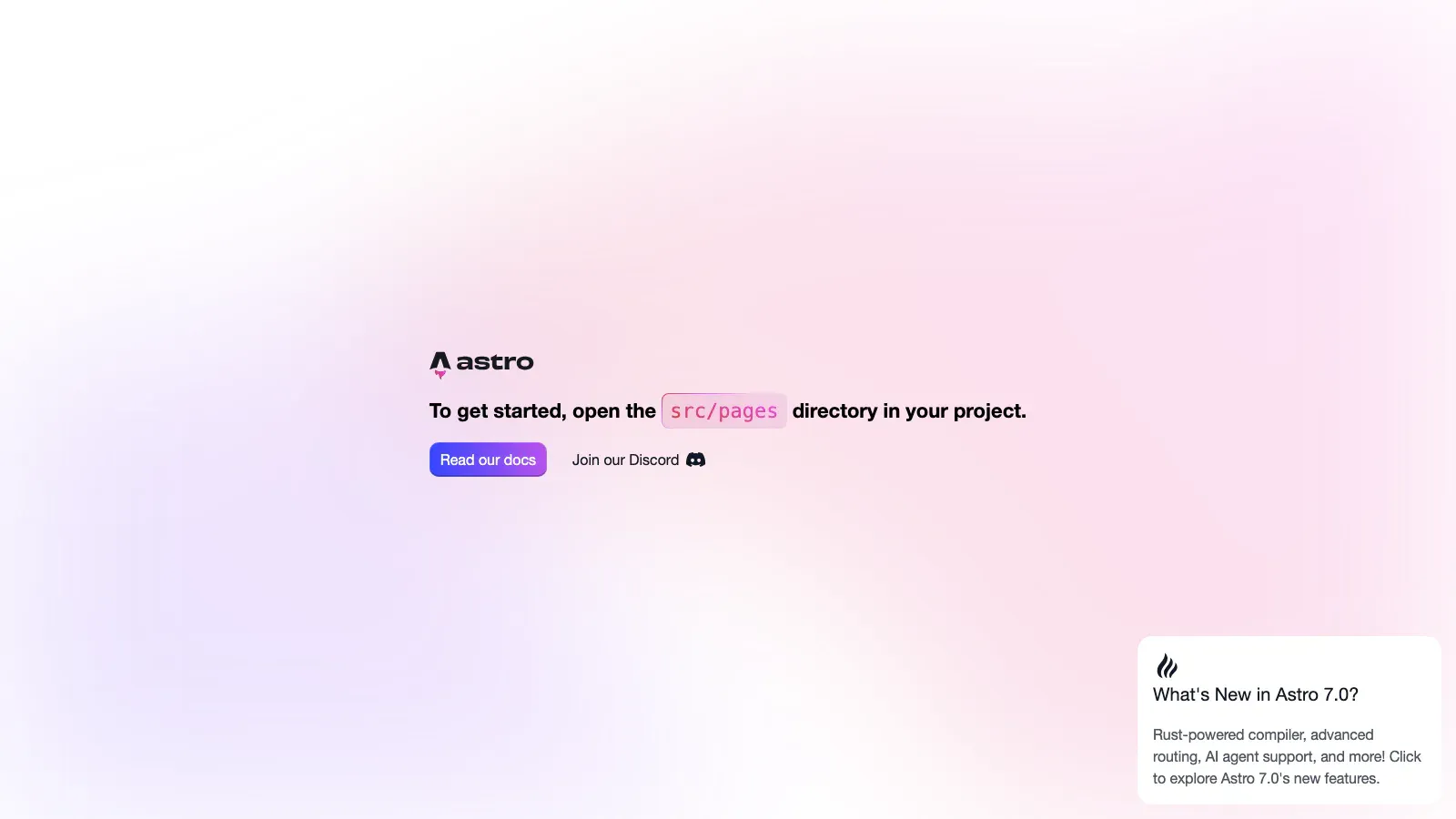
The Astro team’s basics example (npm create astro@latest -- --template basics). It has one page, one layout and one Welcome component, and its package.json installs only Astro.
License and maintenance
- License
- MIT
- Astro version
- Astro 7 (
^7.4.4in the example’s package.json, checked November 1, 2026) - GitHub stars
- 63,686
- Latest commit
- Nov 2, 2026
Limitations
The official basics example deliberately omits a design system, CMS, authentication, and deployment conventions. You must choose those pieces yourself.
2. Bryan Hogan Astro Starter
Best for
Small sites and blogs that want Markdown pages, plain CSS and SEO basics without Tailwind or a UI framework.
What’s included
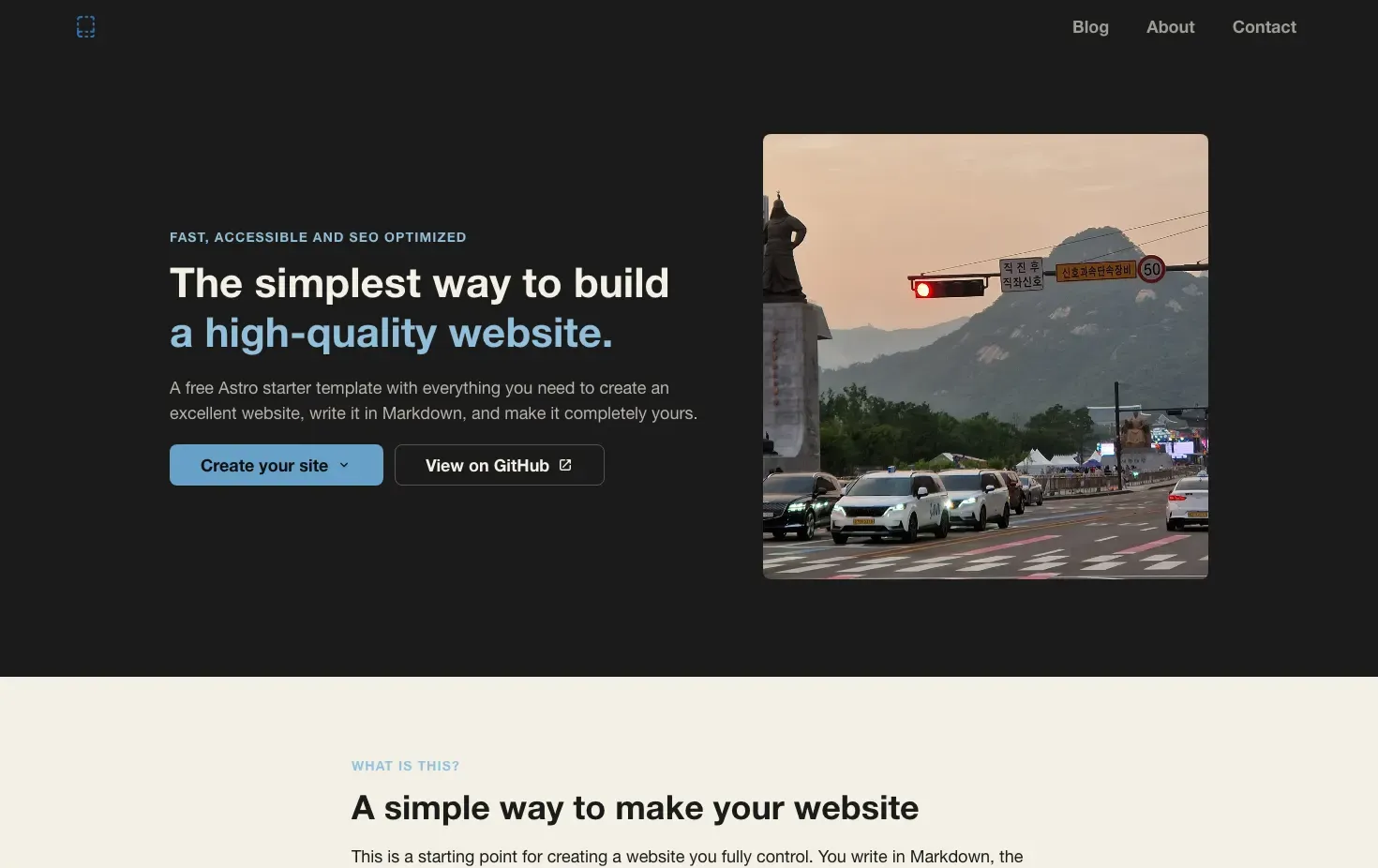
According to its README: pages written as MDX files in src/pages/, a blog in src/content/blog/, one CSS file for colors, fonts and spacing, button, hero, card and navigation components, structured data, generated social images for posts, a sitemap, robots.txt and an RSS feed. Site settings live in src/config.ts. Its package.json installs only Astro, MDX, RSS, sitemap and sharp, and it has its own setup command: npm create @bryanhogan/web-starter@latest.
License and maintenance
- License
- MIT
- Astro version
- Astro 7
- GitHub stars
- 31
- Latest commit
- Oct 29, 2026
Limitations
It uses its own CSS instead of Tailwind, so Tailwind-based component libraries need extra setup. It is a one-person project with 30 GitHub stars, so check recent commits before relying on it long term.
3. DatoCMS Astro Starter Kit
Best for
Content-driven sites whose editors already use or plan to use DatoCMS.
What’s included
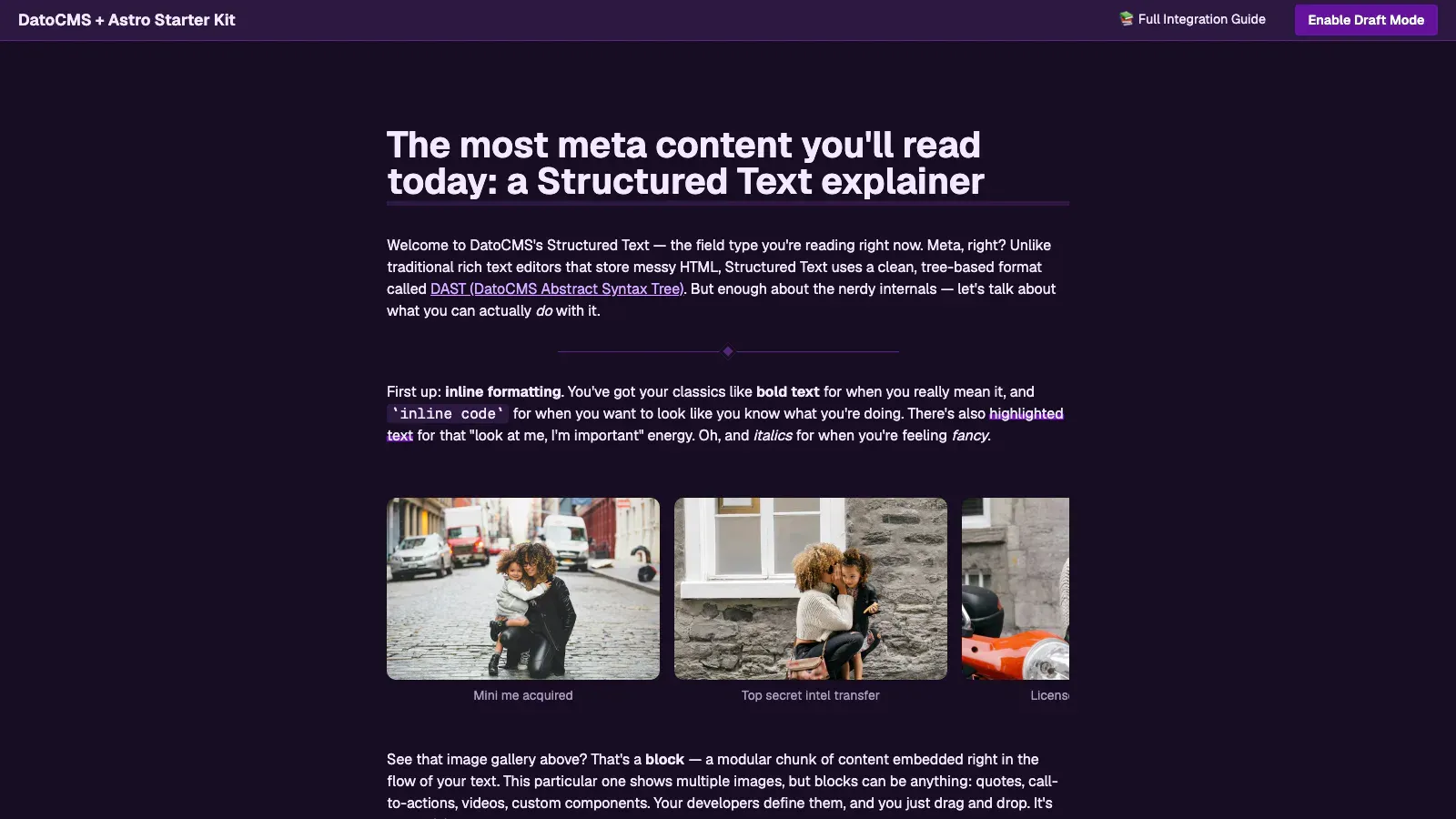
According to its README: typed GraphQL queries with gql.tada, draft mode for editors, click-to-edit overlays that open the DatoCMS field, real-time updates, SEO metadata from DatoCMS, and a single CSS import you can remove. A deploy button creates the DatoCMS project and a Vercel site for you.
License and maintenance
- License
- None declared
- Astro version
- Astro 7
- GitHub stars
- 11
- Latest commit
- Oct 21, 2026
Limitations
It is valuable because of the DatoCMS integration, which also makes it the wrong choice for file-based content or a different CMS. It is the official DatoCMS repository, but it has no license file, so ask DatoCMS if you need written terms.
4. Astro Cloudflare Starter
Best for
Marketing and documentation sites intended for Cloudflare deployment.
What’s included
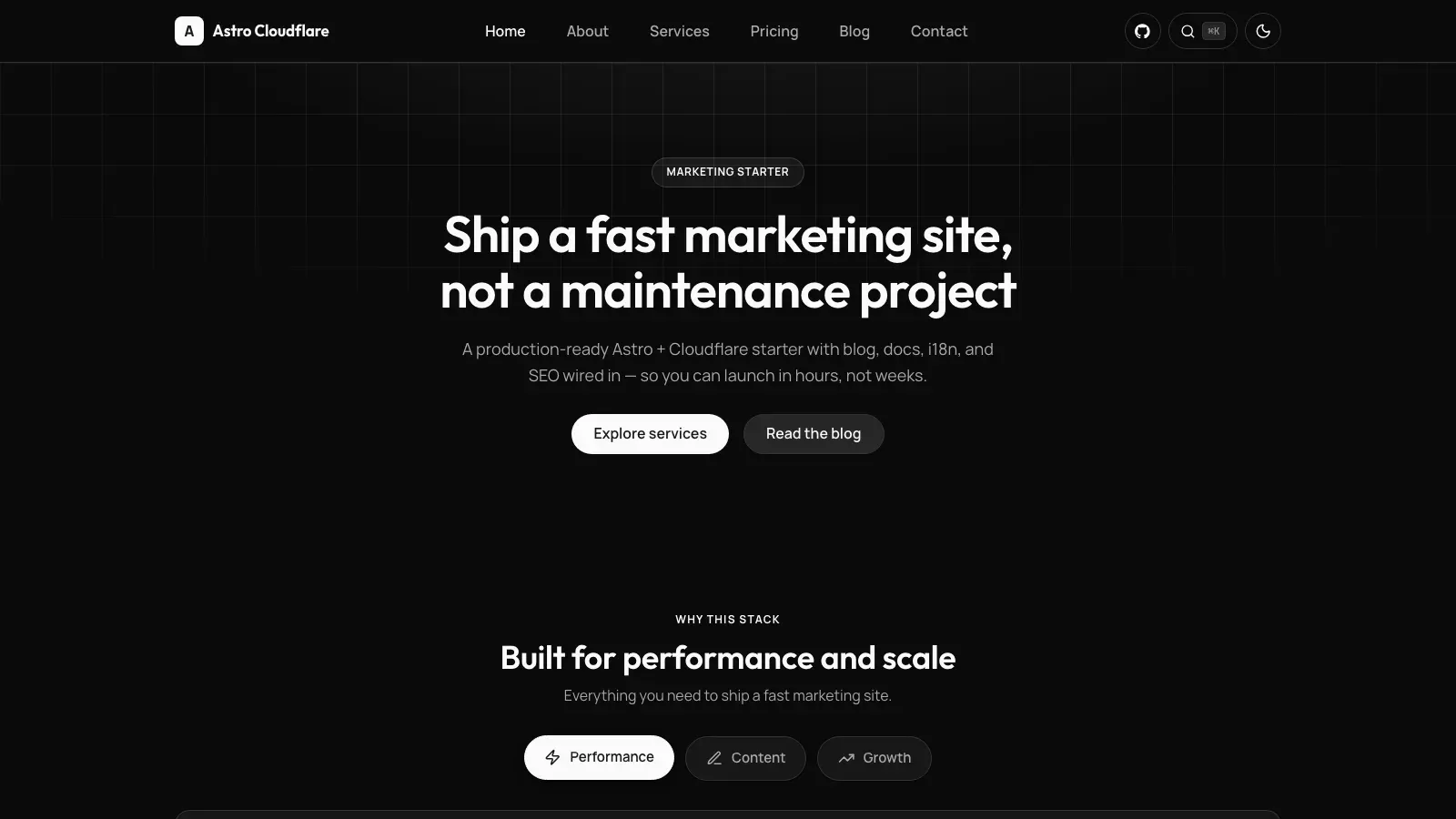
According to its README: marketing pages, a blog and Starlight docs with full-text search, content in Markdown and JSON with no CMS or database, prefix-based i18n routing, light and dark themes, and SEO defaults (canonical, hreflang, JSON-LD, Open Graph, sitemap, RSS and a generated llms.txt). It builds static output for Cloudflare Pages, with optional R2 media storage. It ships ESLint, Stylelint, Vitest and Playwright scripts.
License and maintenance
- License
- MIT
- Astro version
- Astro 7
- GitHub stars
- 43
- Latest commit
- Jul 14, 2026
Limitations
Cloudflare-specific conventions reduce portability. Confirm bindings, adapter settings, and local development expectations before adopting it.
5. Astro EmDash Starter
Best for
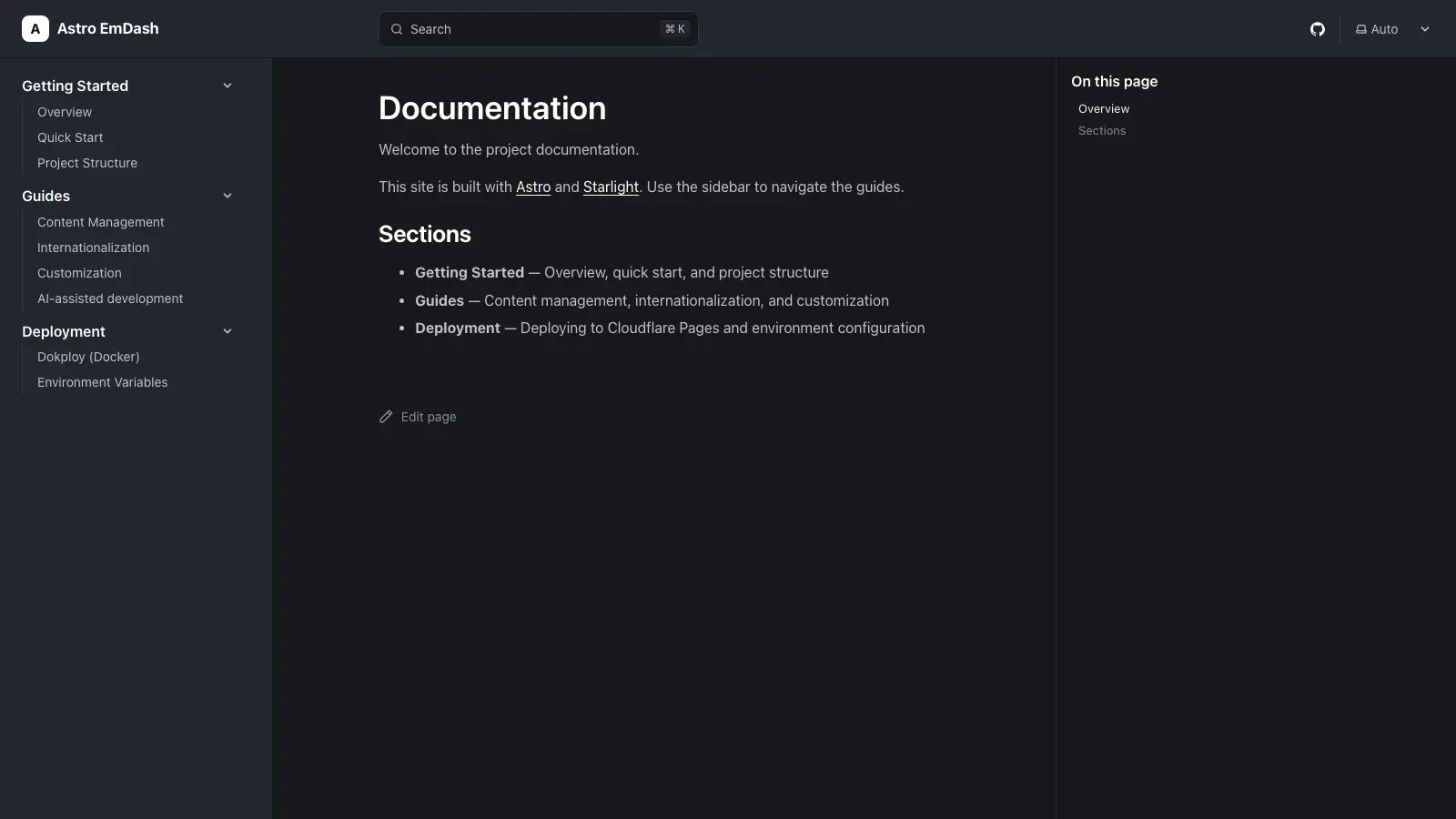
Self-hosted content projects that need Astro with SQLite and object storage.
What’s included
According to its README: the same marketing, blog and Starlight docs layout as Astro Cloudflare Starter by the same author, but blog posts and pages live in the EmDash CMS, stored in SQLite, with media on Cloudflare R2 in production. Editors work in an admin panel at /_emdash/admin, and optional magic-link sign-in uses Resend. It is server-rendered with the Node adapter and includes a Dockerfile for Dokploy or any Docker host.
License and maintenance
- License
- MIT
- Astro version
- Astro 7
- GitHub stars
- 28
- Latest commit
- Aug 22, 2026
Limitations
Database and storage choices make this heavier than a static starter. Use it only when editable server-side content justifies that operational work.
6. Astro shadcn/ui Template
Best for
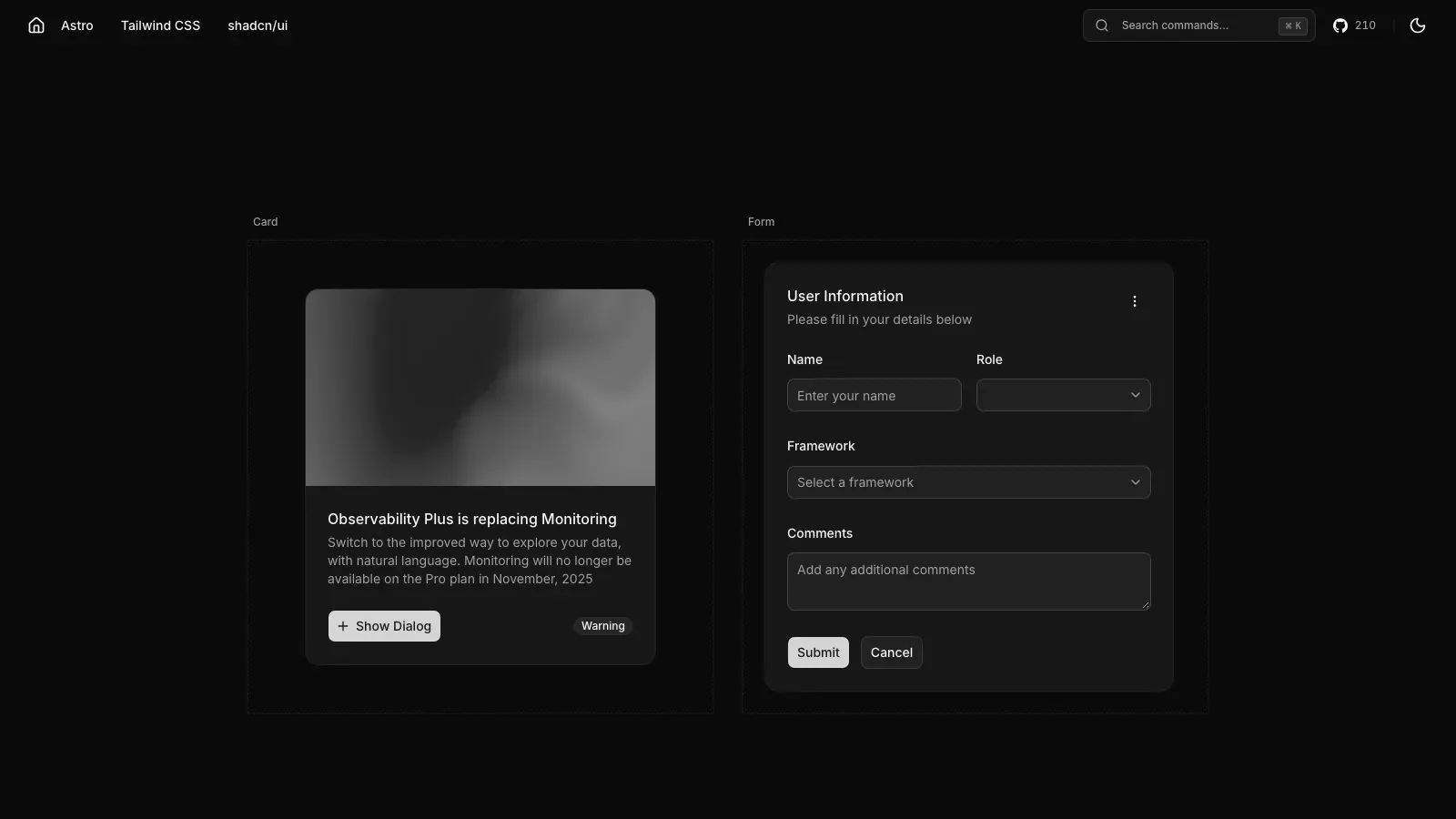
Astro applications that want Tailwind CSS and shadcn/ui components from the first commit.
What’s included
An Astro application starter combining Tailwind CSS with shadcn/ui components.
License and maintenance
- License
- MIT
- Astro version
- Astro 7
- GitHub stars
- 210
- Latest commit
- Oct 28, 2026
Limitations
A component-library starter carries strong UI conventions. Audit the included primitives and remove unused client code before building the product layer.
7. Astro Performance Starter
Best for
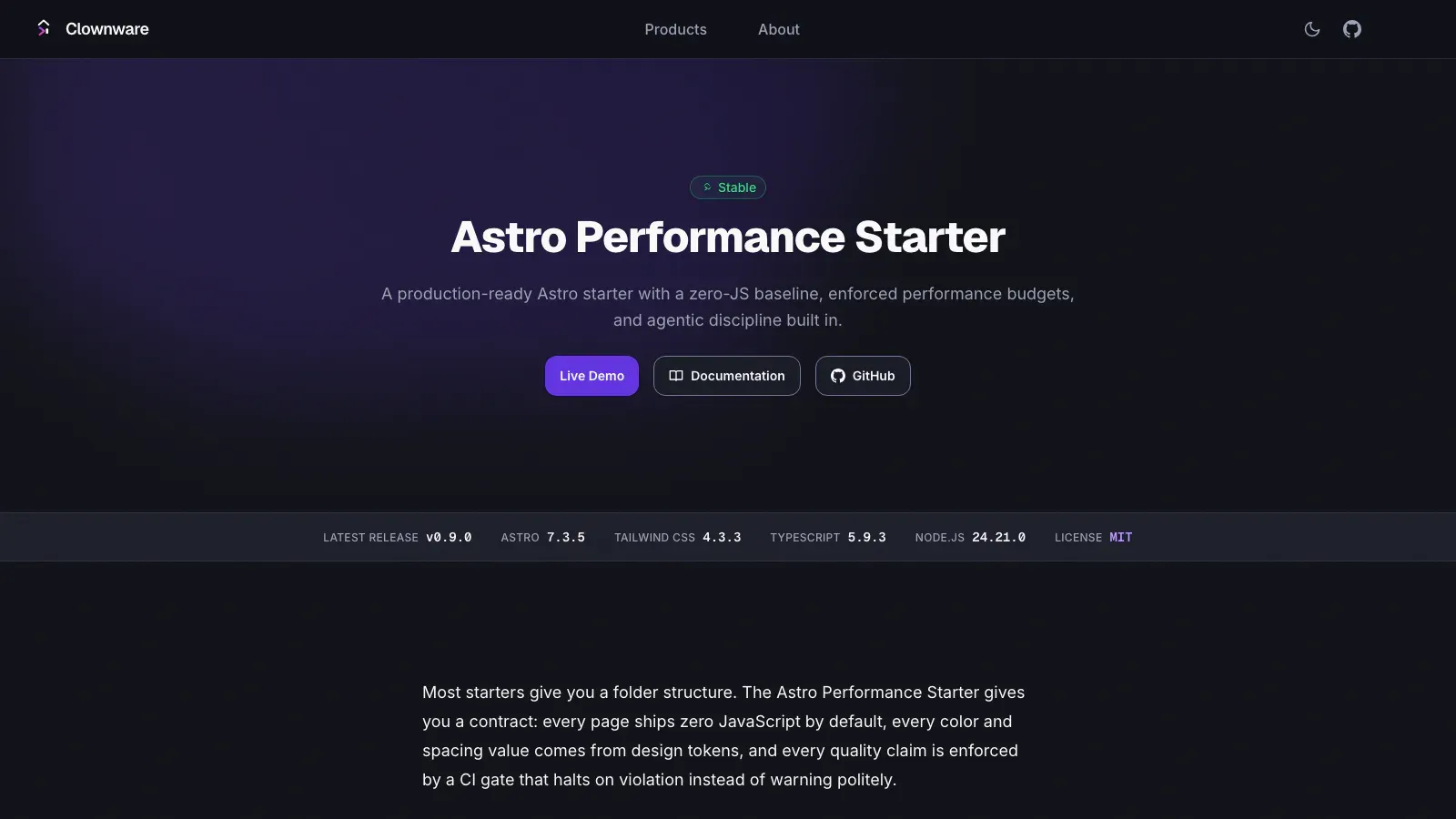
Performance-sensitive sites that want budgets, tests, design tokens, and a zero-JavaScript baseline.
What’s included
An Astro starter with performance budgets, design tokens, tests, and a zero-JavaScript baseline.
License and maintenance
- License
- MIT
- Astro version
- Astro 7
- GitHub stars
- 7
- Latest commit
- Oct 21, 2026
Limitations
Its stricter defaults may feel slower for an early prototype. The value appears when the team intends to keep the performance and testing discipline.
8. Astro i18n Starter
Best for
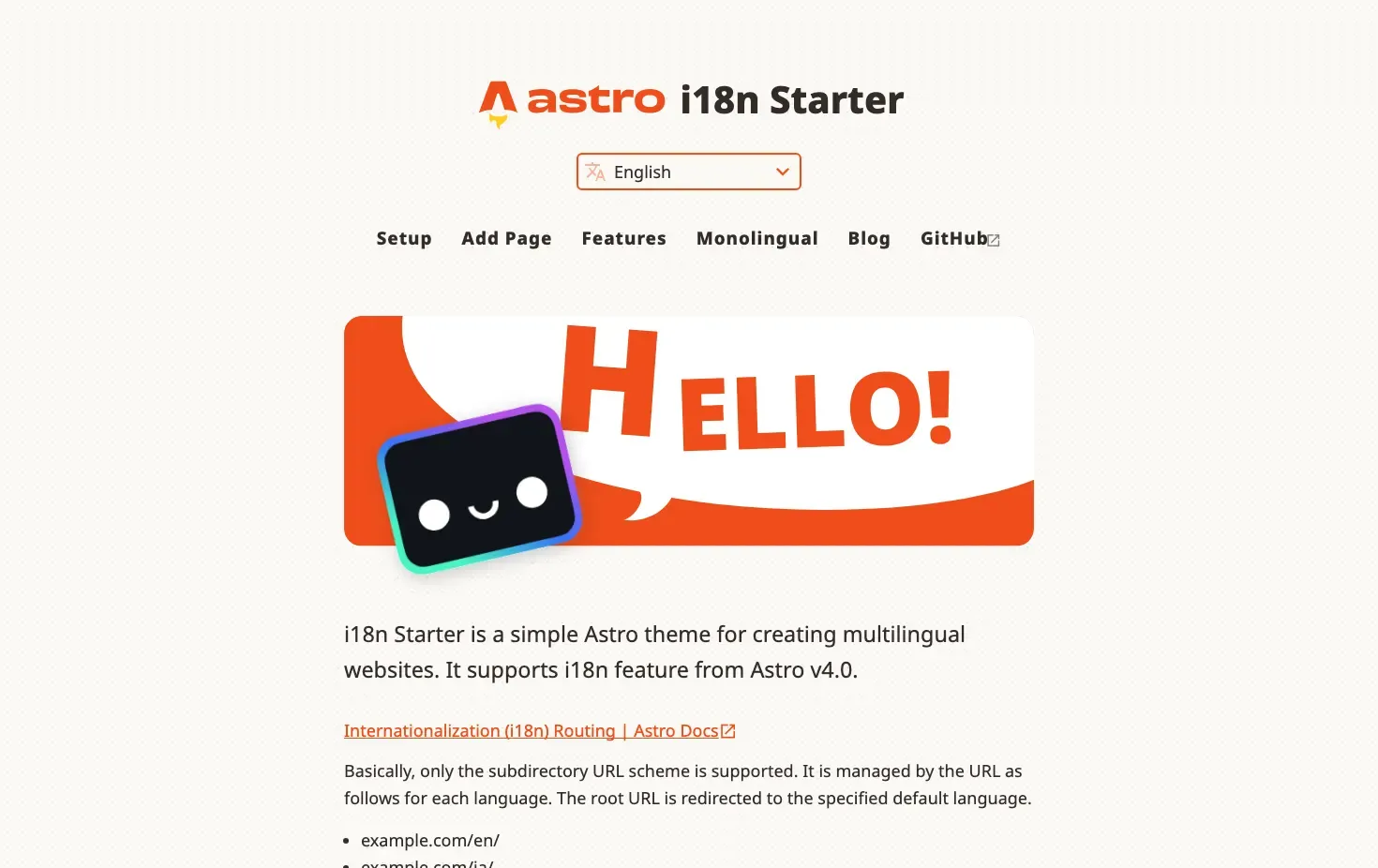
Multilingual sites that want Astro’s built-in i18n routing with language-prefixed URLs and plain CSS.
What’s included
According to its README and source: Astro’s official i18n routing with each language under its own path, example pages and blog posts in English, Japanese, Simplified Chinese and Arabic (right-to-left), a language switcher, a banner that links to the visitor’s browser language, a notice on pages that are not translated, MDX, RSS, a localized sitemap and vanilla CSS. Install it with npm create astro@latest -- --template psephopaiktes/astro-i18n-starter.
License and maintenance
- License
- MIT
- Astro version
- Astro 7
- GitHub stars
- 150
- Latest commit
- Jun 24, 2026
Limitations
It is an i18n foundation, not a finished site design. Translation workflow and localized SEO still need project decisions, and it only supports the subdirectory URL format (example.com/en/). Our multilingual website guide covers Astro’s built-in i18n routing.
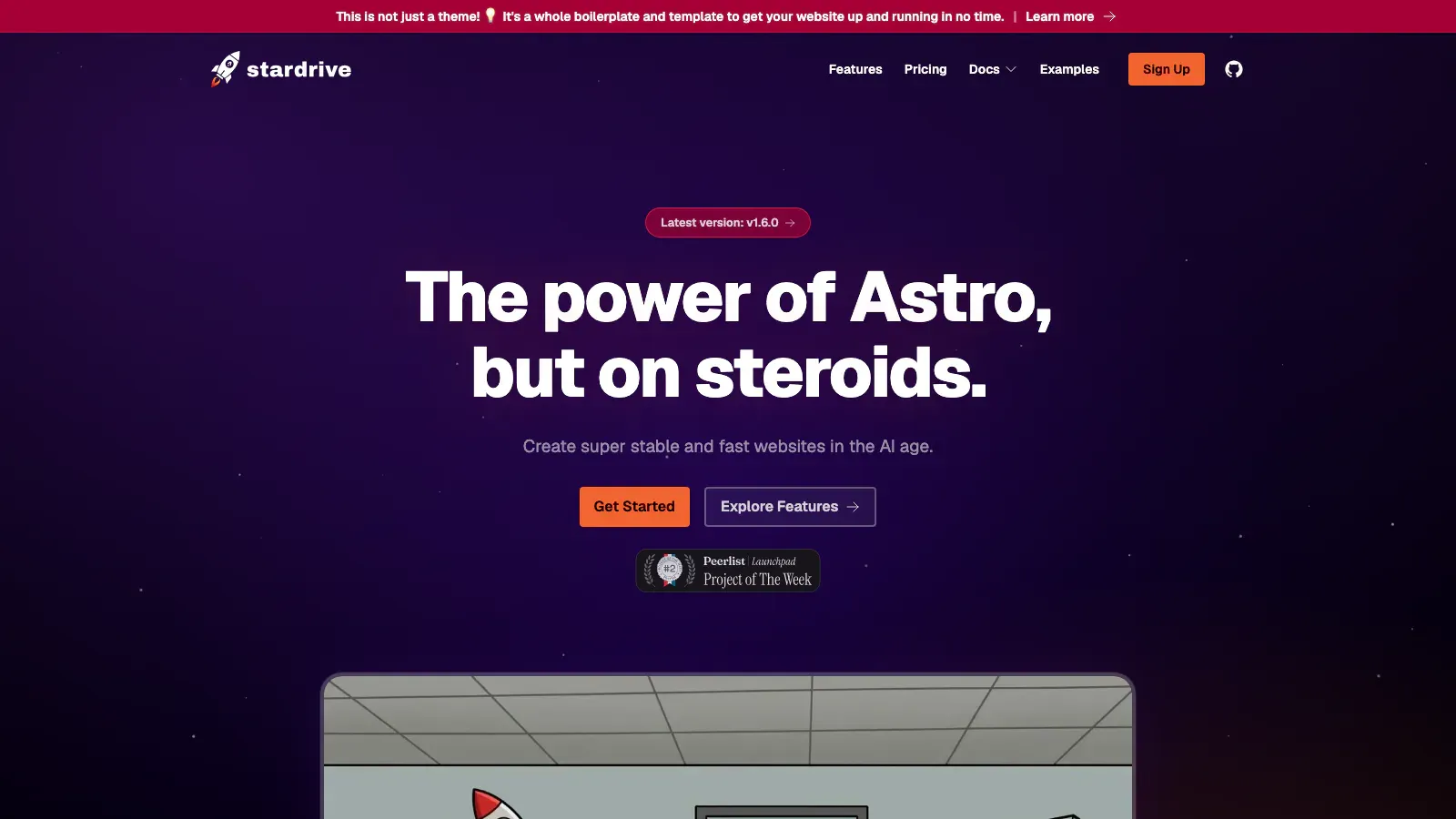
9. Stardrive
Best for
Content-heavy sites that want structured defaults and deployment tooling in a compact boilerplate.
What’s included
An Astro boilerplate for content sites with structured defaults and deployment tooling.
License and maintenance
- License
- MIT
- Astro version
- Astro 7
- GitHub stars
- 220
- Latest commit
- Oct 27, 2026
Limitations
Review its opinions against the current Astro release and your deployment target. Remove unused tooling before treating it as the long-term baseline.
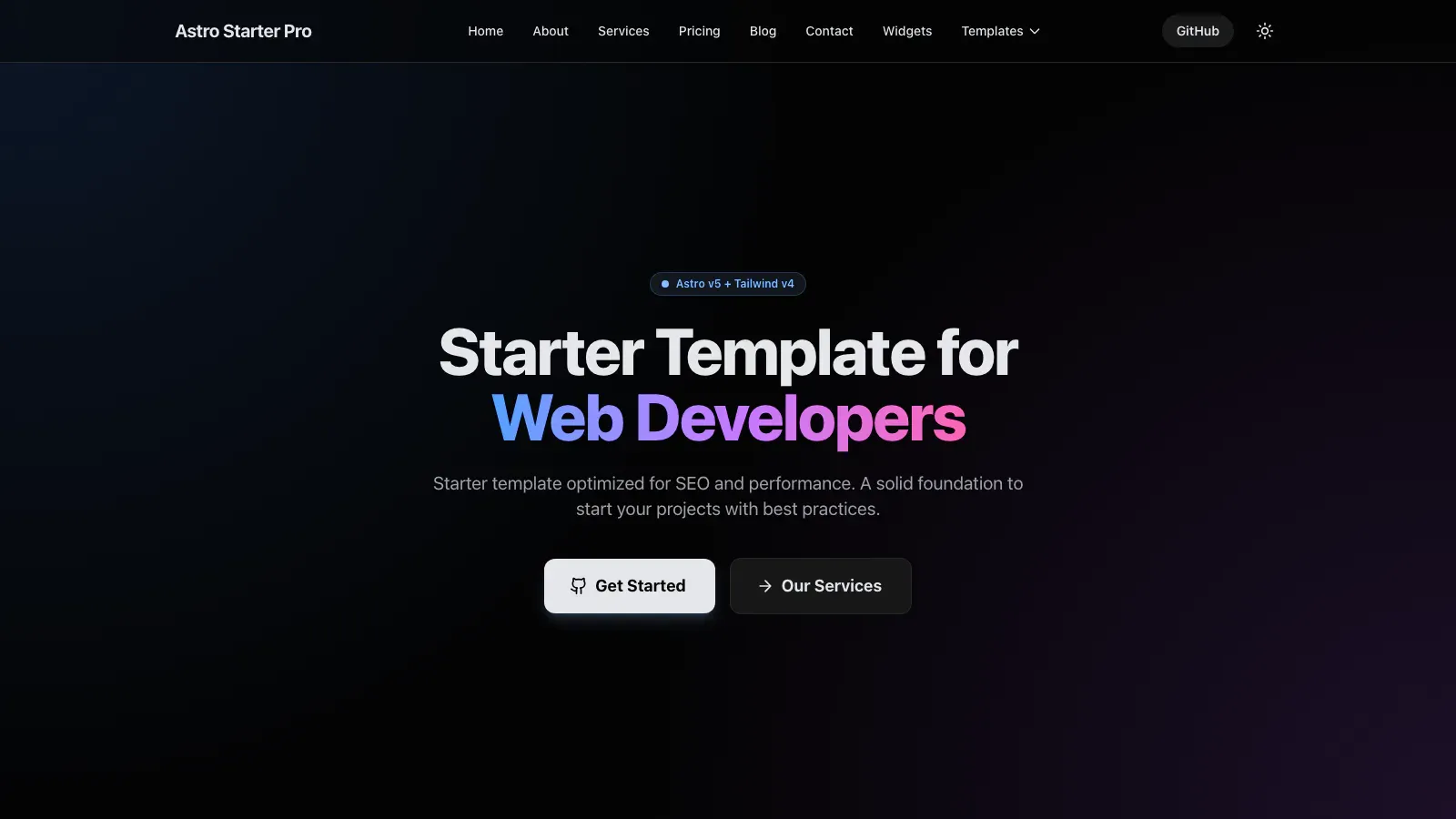
10. Astro Starter Pro
Best for
Production marketing sites that want SEO, performance, and maintainability conventions established early.
What’s included
A production-oriented Astro starter focused on SEO, performance, and maintainable defaults.
License and maintenance
- License
- MIT
- Astro version
- Astro 7
- GitHub stars
- 61
- Latest commit
- Oct 26, 2026
Limitations
A production-oriented starter carries more configuration than a learning example. Confirm that each convention serves the project before preserving it.
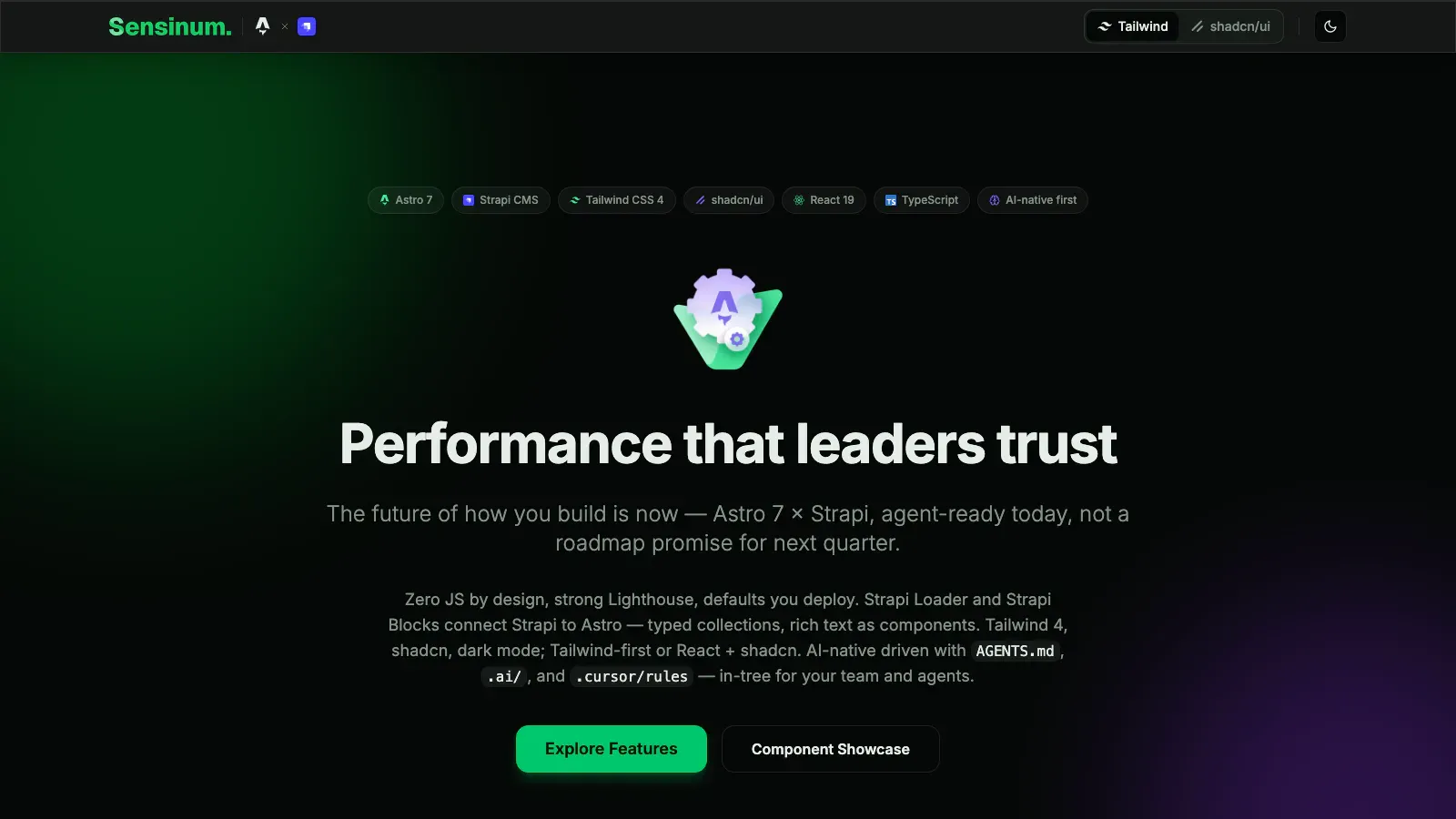
11. Astro Strapi Starter
Best for
Editorial projects that have already chosen Strapi as their headless content system.
What’s included
An Astro starter for building content-driven sites with Strapi.
License and maintenance
- License
- MIT
- Astro version
- Astro 7
- GitHub stars
- 23
- Latest commit
- Nov 3, 2026
Limitations
The CMS integration creates a second application to operate. It is poor fit for teams that can publish comfortably from Astro content collections.
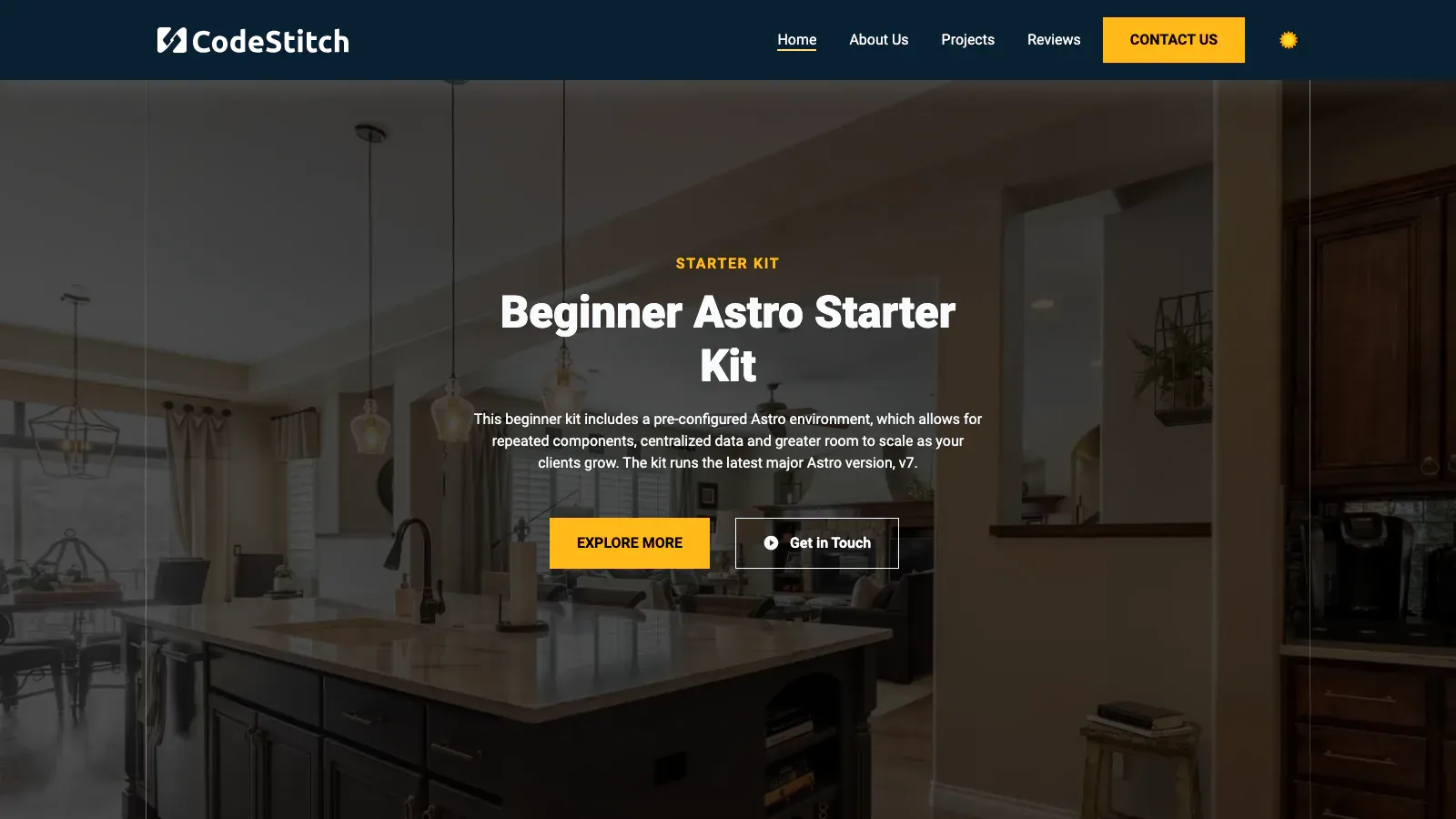
12. Beginner Astro Starter Kit
Best for
Beginners assembling a multi-page site from CodeStitch blocks and documented project defaults.
What’s included
An Astro starter kit with CodeStitch blocks, multiple pages, and beginner-oriented project defaults.
License and maintenance
- License
- CC0-1.0
- Astro version
- Astro 7
- GitHub stars
- 33
- Latest commit
- Oct 4, 2026
Limitations
Block-based assembly can produce inconsistent pages without a clear design system. Standardize type, spacing, and content patterns before adding many sections.
13. Astroplate
Best for
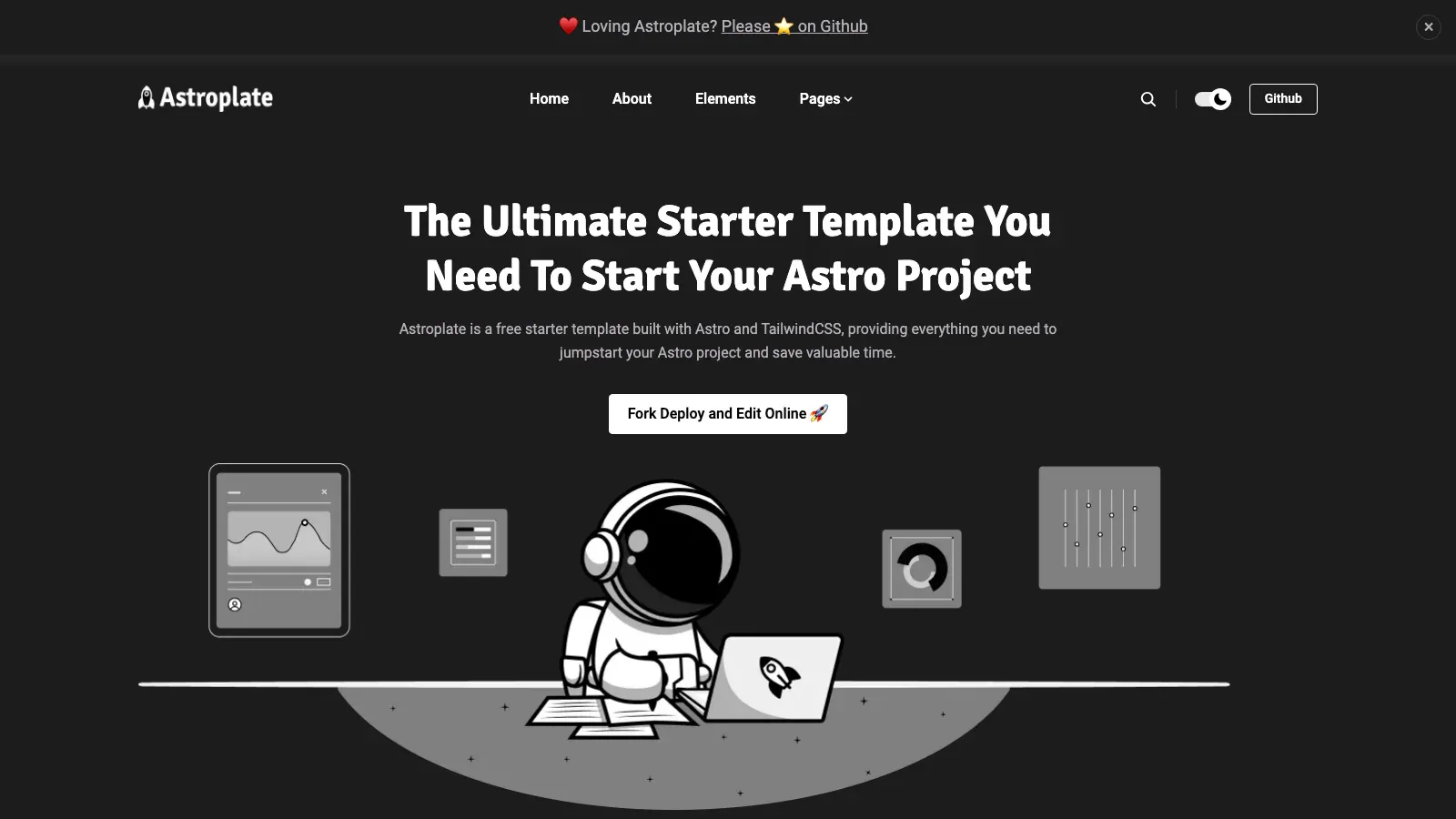
Content sites and small businesses that want a finished multi-page starter with a blog, authors, search and multilingual support.
What’s included
According to its README: 15+ pages (home, about, contact, authors, blog, tags, categories, search, custom 404 and privacy policy), multiple authors, multilingual content, search, dark mode, related posts, Markdown and MDX, Disqus comments, Google Tag Manager, Netlify settings, optional Cloudflare Workers deployment, and generated llms.txt files. It is built with Astro, Tailwind CSS and TypeScript, with React for interactive parts.
License and maintenance
- License
- MIT
- Astro version
- Astro 7
- GitHub stars
- 1,222
- Latest commit
- Jul 28, 2026
Limitations
It is a full website rather than a minimal baseline, and it adds React. Remove the comments, analytics and pages you will not use before building on it.
14. Accessible Astro Starter
Best for
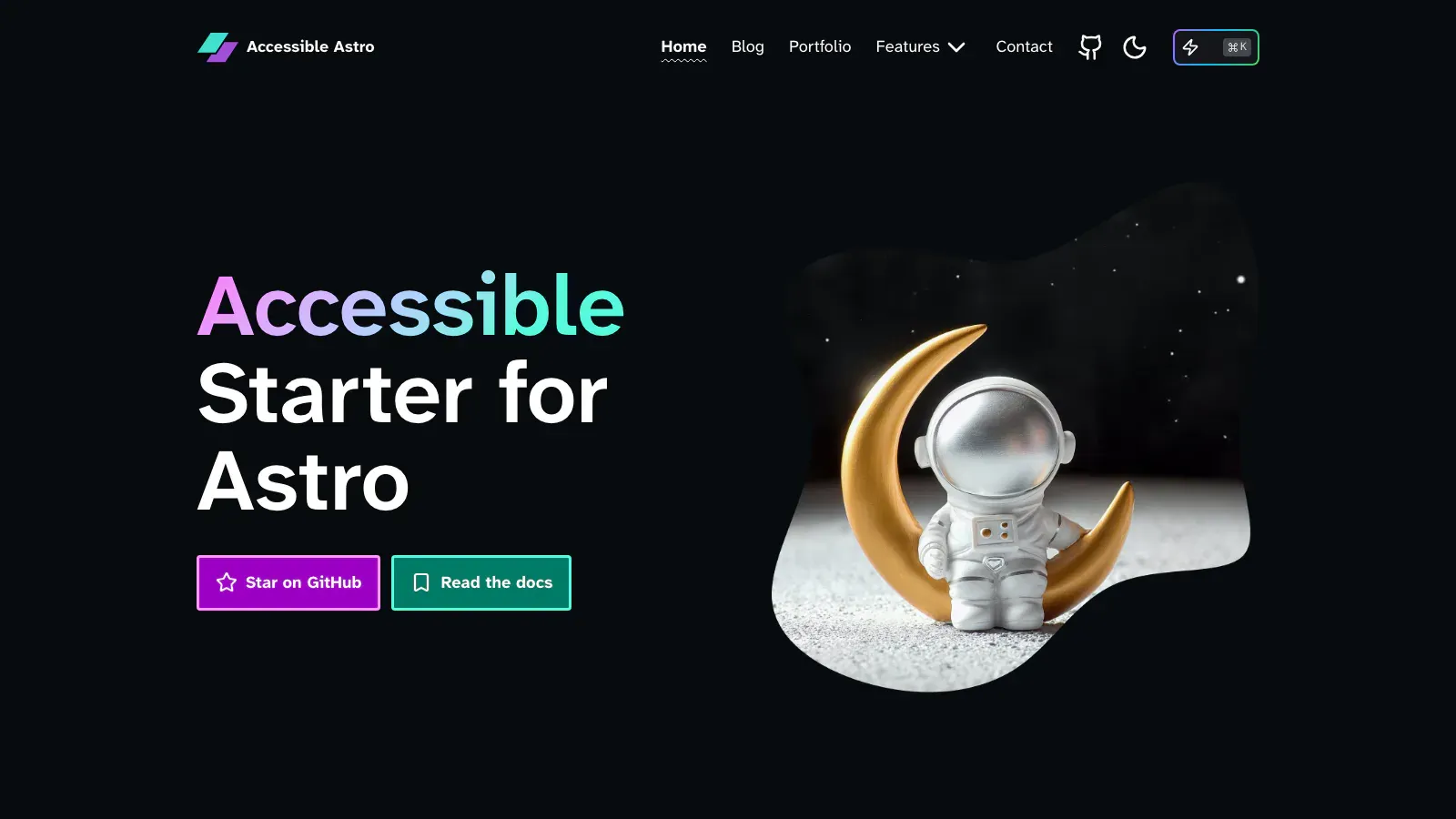
Teams that need accessibility built in from the first commit: semantic landmarks, skip links, keyboard navigation and accessible forms.
What’s included
According to its README: skip links, landmark regions, a focus outline that works on light and dark backgrounds, keyboard-accessible dropdown navigation, dark mode, high-contrast and reduced-motion toggles, form components with validation and screen reader support, an accessibility statement theme, a blog with pagination, ESLint with eslint-plugin-jsx-a11y, Prettier, Tailwind CSS 4 and Markdown and MDX support.
License and maintenance
- License
- MIT
- Astro version
- Astro 7
- GitHub stars
- 1,191
- Latest commit
- Oct 15, 2026
Limitations
Its package.json requires Node.js 24.19 or newer and npm 11.17 or newer, which is higher than Astro itself needs. Accessible components still need testing with your real content and colors.
15. Techlo Lite
Made by us
Techlo Lite is the free, open-source edition of our paid Techlo theme.

Best for
Service and technology websites that need a working multi-page structure rather than a blank project.
What’s included
Techlo Lite is best for IT service providers, software teams, and tech consultancies that want a free Astro starter with services, team, and blog pages without the full page library of the pro theme.
License and maintenance
- License
- MIT
- Astro version
- Astro 7
- GitHub stars
- 6
- Latest commit
- Nov 3, 2026
Limitations
It is a website starter, not a neutral application boilerplate. Remove the supplied sections and content models that do not match the project.
16. Stella (Paid)

Best for
Teams that want a finished SaaS site instead of a foundation: pricing, integrations, changelog, careers, docs and blog pages already designed.
What’s included
Where a starter gives you an empty project, Stella starts with 18 designed pages. You replace content in collections instead of building the pages.
-
18 pages and 19 reusable sections
-
Pricing, integrations, changelog, careers, docs, and blog content
-
Multilingual Astro 7 project with Figma source files
Access and maintenance
-
Access: Paid Astro theme by Getastrothemes
-
Maintenance: Product updates and documentation are included
Limitations
This is a finished site rather than a starter to grow into. If the structure is still undecided, start from one of the official examples above and add pages as you go.
17. Upstart (Paid)
Best for
Teams that want a finished launch site instead of a foundation, with fewer pages to fill than Stella.
What’s included
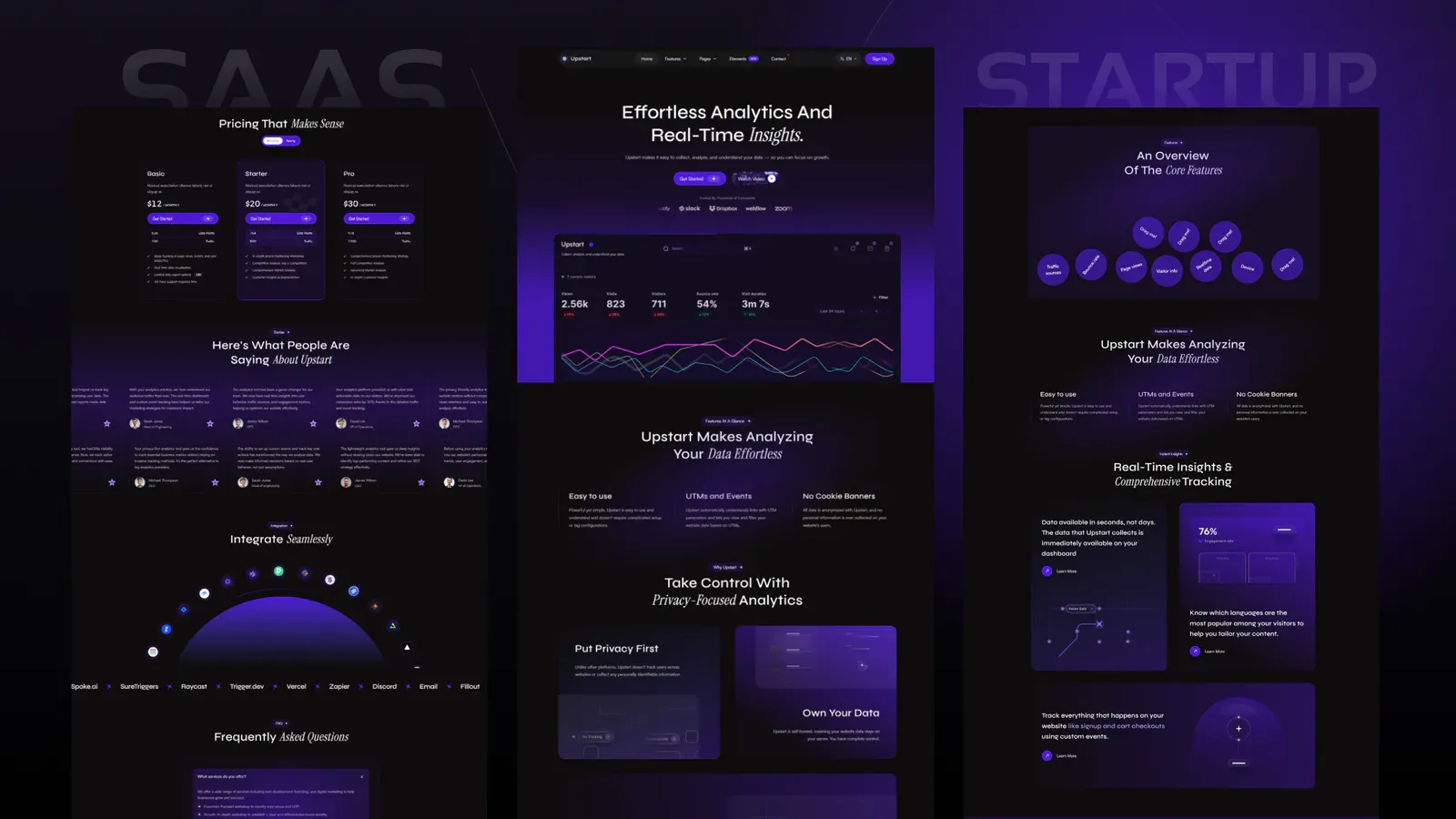
Where a starter gives you an empty project, Upstart starts with 15 designed pages for a product launch. You replace content instead of building the pages.
-
15 pages and 13 reusable sections
-
Pricing, FAQ, integrations, changelog, docs, and blog content
-
Multilingual Astro 7 project with Figma source files
Access and maintenance
-
Access: Paid Astro theme by Getastrothemes
-
Maintenance: Product updates and documentation are included
Limitations
It assumes the launch is the whole site. Teams that already need careers and company pages should start from Stella above instead.
How to start a project from a starter
Astro’s CLI can copy any public GitHub repository as a new project. Astro 7.4.4 needs Node.js 22.23.4 or newer, per the astro package on npm (checked November 1, 2026).
# An official example, such as basics
npm create astro@latest -- --template basics

# Any starter on GitHub (uses the repository's default branch)
npm create astro@latest -- --template <github-user>/<repo>

# A specific branch
npm create astro@latest -- --template <github-user>/<repo>#<branch>
If a starter targets an older Astro major, run npx @astrojs/upgrade after installing and read the upgrade guide for breaking changes. Our theme install and customization guide covers the next steps.
Other official examples, such as with-tailwindcss and framework-react, work with the same --template flag. None of the picks here is a SaaS boilerplate with auth and billing. For a SaaS marketing site, see our landing page themes.